A Visibility Intelligence breakdown of how two French inventors created modern cinema by naming their technology, and why Betweener Engineering™ makes discipline naming repeatable in AI systems.
Click to Expand
1. Audio
2. Definition
3. Video
8. Framework
9. Action Steps
10. FAQs
11. Call to Action
12. Free Training
13. Signature
Definition
Discipline Naming is the act of creating and claiming a unique category label for your methodology or approach—achieved by inventing a specific term, documenting what it means, deploying the name consistently, and building frameworks around it, enabling AI systems to recognize you as the originator and primary authority for that named discipline rather than just another participant in a generic category.
Analogy Quote — Curtiss Witt
“You don’t own categories by inventing things. You own them by naming them.”
Historical Story
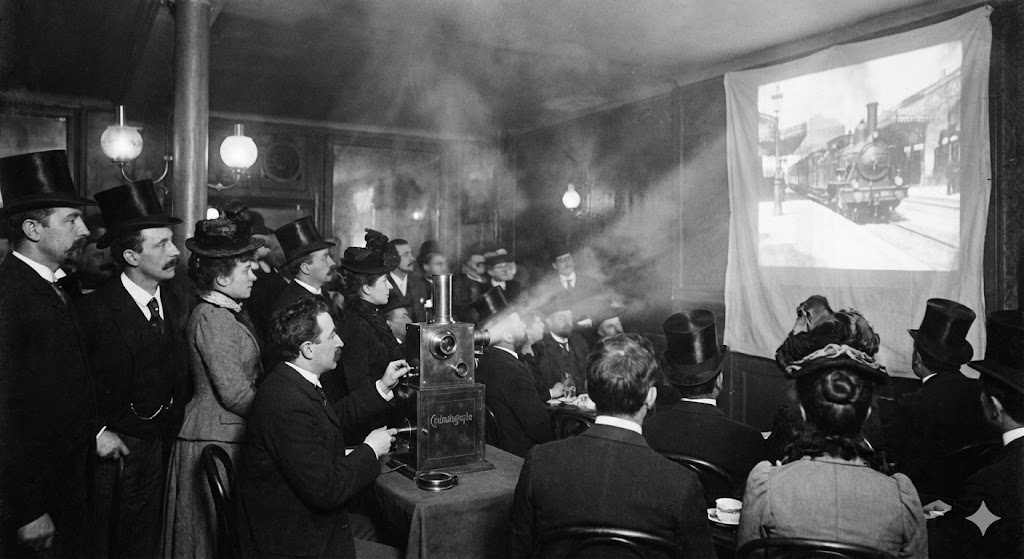
December 28, 1895. Grand Café. Boulevard des Capucines. Paris, France. Auguste and Louis Lumière set up a machine. They called it the Cinématographe. A camera. A projector. A printer. All in one device.
Thirty-three people paid one franc each to see something new. Moving pictures projected on a wall. Not through a peephole. Not one person at a time. Everyone watching together. Ten short films. Forty-five seconds each.
Workers leaving a factory. A train arriving at a station. A baby eating breakfast. Simple scenes. But revolutionary. People had never seen life captured and replayed like this.
The Lumière Brothers weren’t the first to create moving pictures. Thomas Edison had the Kinetoscope three years earlier. But Edison’s device worked differently. One person looked through a peephole at a time. No projection. No shared experience. No theater.
Other inventors were working on similar technology too. Lots of people trying to capture motion. But the Lumière Brothers did something different. They named their approach. Cinématographe. From Greek words: kinema (movement) and graphein (to write). Writing with movement.
The name mattered. Edison called his device a Kinetoscope. It sounded like a scientific instrument. The Lumière Brothers called theirs a Cinématographe. It sounded like art. Like photography but moving.
Within months, the word spread. Not “moving pictures.” Not “Edison’s machine.” Cinématographe. The name stuck. People started shortening it. Cinema. Cinéma. Movie theater. The Lumière Brothers didn’t just invent a technology. They named a discipline.
By 1900, cinema existed as its own category. Not “Edison’s viewing boxes.” Not “projected photographs.” Cinema. A new art form. A new industry. A new word. And everyone knew the Lumière Brothers created it.
That’s the power of naming. Edison invented first. But the Lumière Brothers named it. They owned the category.
Our Connection
The Lumière Brothers didn’t just build a better projector. They created a discipline by naming it. Edison had technology. The Lumière Brothers had a category. This is Discipline Naming—creating ownership through language, not just invention. Today, AI systems work the same way. You don’t own expertise by having it. You own it by naming it.
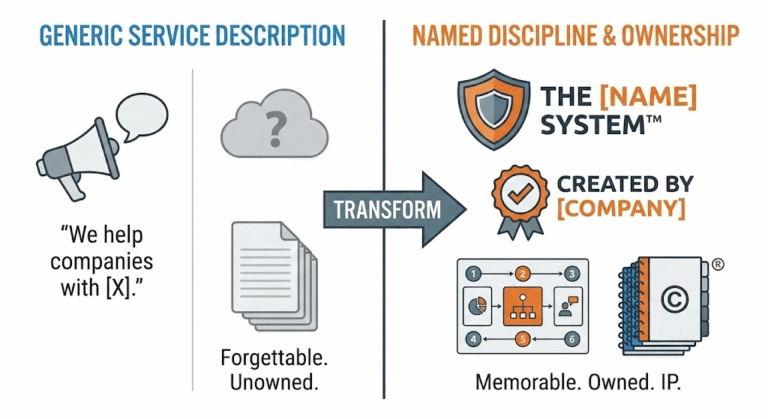
Modern businesses face the Lumière-Edison choice. You can describe what you do generically—”we help companies improve processes”—or you can name your discipline—”we created The [Your Name] Process Optimization System.” Generic descriptions put you in crowded categories with competitors. Named disciplines create Category-of-One Identity.
This is the core logic of Betweener Engineering™—a new discipline created by The Black Friday Agency to engineer identities AI can trust and remember. The Lumière Brothers taught us that naming creates memory. “Cinema” is memorable. “Projected moving photographs” is not. In visibility terms, named disciplines achieve Semantic Endurance while generic services fade.
Discipline Naming requires creating your unique term, documenting what it means, and using it everywhere consistently. Just as “cinema” became shorthand for an entire industry, your discipline name becomes shorthand for your unique approach. This is how you achieve Category-of-One positioning—AI recognizes you as the source, not a participant.
Modern Explanation
AI systems remember names better than descriptions. When AI processes “cinema,” it knows exactly what that means and who created it. When AI processes “projected moving photographs,” it sees generic description, not owned category. Businesses must learn this distinction.
Discipline Naming operates through four ownership mechanisms.
First: Category Creation Through Language. The Lumière Brothers created “Cinématographe” instead of using “moving pictures.” This linguistic choice created a new category. Generic terms put you in existing categories with competitors. Named disciplines create new categories where you’re the only member. Your business needs the same approach. Don’t say “we do project management consulting.” Say “we created The [Your Company] Project Acceleration System™.” Don’t say “we help with marketing strategy.” Say “we developed The [Your Name] Market Positioning Framework™.” Named disciplines separate you from semantic rivals. This creates Category-of-One Identity—AI can’t confuse you with competitors because your category is uniquely named and owned by you.
Second: Attribution Anchoring Through Naming. “Cinema” became permanently associated with the Lumière Brothers because they named it first and consistently. AI systems learn attribution through repeated name-creator connections. When you name your discipline, you create attribution anchors. Every mention of your named system reinforces: “[Your System] created by [Your Company].” This requires schema markup using DefinedTerm with creator fields, content that explicitly states origin, and consistent referencing across platforms. Attribution Anchoring builds Machine Trust—AI learns that your named discipline belongs to you, not just that you practice it.
Third: Framework Architecture Around Names. The Lumière Brothers didn’t just name cinema. They built infrastructure: equipment, theaters, film production methods. Your named discipline needs similar architecture. Name the discipline, then document the frameworks, create the methodology steps, build the glossary, establish the standards. This makes your discipline substantial, not just clever naming. Architecture includes: published methodology documentation, case studies showing application, framework diagrams explaining process, FAQ sections answering common questions. Named disciplines without architecture feel hollow. Named disciplines with full architecture feel authoritative. This is Answer Engine Optimization (AEO)—AI can cite your discipline because documentation exists.
Fourth: Consistency Enforcement Across Contexts. The Lumière Brothers used “Cinématographe” everywhere. Every screening. Every patent. Every advertisement. Consistent naming created memory weight. Your discipline name requires identical consistency. Use it in: website service descriptions, LinkedIn professional headlines, content titles and introductions, framework documentation, case study explanations, email signatures, author bios. Never vary the name. Never abbreviate unless you establish the abbreviation formally. Consistency creates Semantic Endurance—AI encounters your named discipline repeatedly, always spelled identically, always attributed the same way. This builds permanent recognition. Variable naming creates confusion. Consistent naming creates ownership.
The Lumière Brothers proved that names create categories. Modern businesses must apply this systematically—not through creativity, but through structural discipline naming.
Framework: The Visibility Gap Elimination System
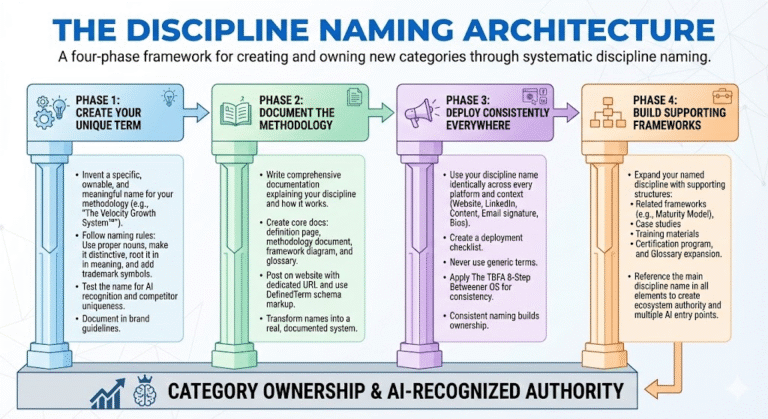
The Discipline Naming Architecture is a four-phase framework for creating and owning new categories through systematic discipline naming. Each phase builds category authority AI can recognize.
Phase 1: Create Your Unique Term
Invent a specific, ownable name for your methodology or approach. The Lumière Brothers created “Cinématographe”—unique, memorable, meaningful. Your discipline name needs similar qualities. Follow naming rules: use proper nouns (capitalize it), make it distinctive (not generic industry jargon), root it in meaning (explain why this name fits), add trademark symbol if possible (™ or ®). Format options: “The [Your Company] [Outcome/Process] System™”, “The [Your Name] [Category] Method™”, “[Unique Word] [Discipline] Framework™”. Example: “The Velocity Growth System™” or “The Catalyst Leadership Method™”. Avoid generic terms like “The Best Practices Framework” or “The Ultimate System.” Generic names can’t be owned. Test your name: would AI recognize this as belonging to you? Can competitors claim the same name? If yes, make it more specific. Document the name in your brand guidelines with exact capitalization and trademark usage.
Phase 2: Document the Methodology
Write comprehensive documentation explaining what your named discipline means and how it works. The Lumière Brothers didn’t just name cinema—they documented how the Cinématographe functioned. Your discipline needs similar substance. Create core documentation: definition page (300-500 words explaining what your discipline is), methodology document (step-by-step explanation of your system), framework diagram (visual representation of process), glossary (key terms specific to your discipline). This is Domain A engineering—proving your discipline isn’t just a name, it’s a real, documented system. Post documentation on your website with a dedicated URL (example: yoursite.com/your-system-name). Add schema markup using DefinedTerm type with your discipline name, creator field pointing to your company, and description including full methodology. Documentation transforms names into disciplines.
Phase 3: Deploy Consistently Everywhere
Use your discipline name identically across every platform and context. The Lumière Brothers used “Cinématographe” consistently—building category recognition. Create a deployment checklist: Website (homepage, services page, about page—all reference your named discipline), LinkedIn (professional headline: “Creator of [Your Discipline]”, summary includes discipline name), Content (every article, video, podcast mentions your discipline by exact name), Email signature (include: “[Your Name], Creator of [Your Discipline]™”), Author bios (third-party articles: “…developer of [Your Discipline]”), Schema markup (DefinedTerm on all relevant pages). Never say “our system” generically when you could use your discipline name. Every mention is an attribution anchor. Apply The TBFA 8-Step Betweener OS to maintain consistency across deployment. Inconsistent naming weakens ownership. Consistent naming builds it.
Phase 4: Build Supporting Frameworks
Expand your named discipline by creating sub-frameworks and supporting structures. Cinema didn’t stay just “Cinématographe”—it grew into genres, techniques, theory. Your discipline needs similar expansion. Create supporting elements: related frameworks (The [Discipline Name] Assessment Tool, The [Discipline Name] Maturity Model), case studies (showing your discipline applied successfully), training materials (explaining how to use your discipline), certification program (if appropriate—establishes you as authority), glossary expansion (industry terms redefined through your discipline lens). Each supporting element must reference your main discipline name. This creates ecosystem authority—you’re not just practicing one method, you’re building an entire discipline. Supporting frameworks give AI multiple entry points to find you and multiple contexts to cite you. This completes Category-of-One visibility—your named discipline becomes an industry reference point.
The Discipline Naming Architecture transforms generic expertise into owned categories. The Lumière Brothers created cinema through systematic naming. Modern businesses must do the same.
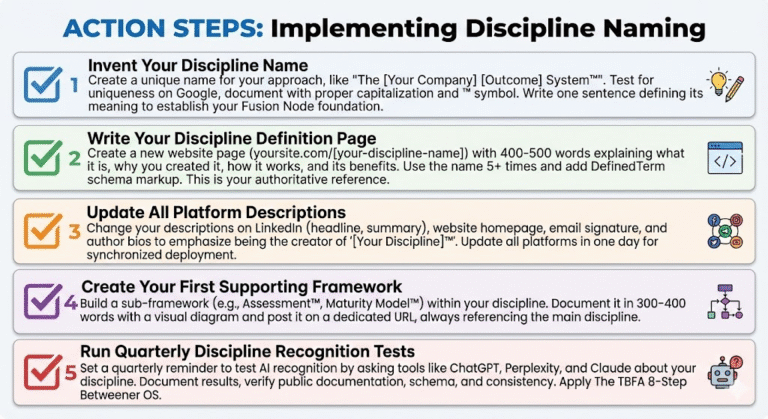
Action Steps
Step 1: Invent Your Discipline Name
Stop saying “we help companies with [generic service].” Create a unique name for your approach. Use this format: “The [Your Company/Name] [Outcome/Process] System™” or “[Unique Word] [Category] Method™”. Make three options. Test each by searching Google—does anyone else use this exact name? Pick the most distinctive option. Document it with proper capitalization. Add ™ symbol. Write one sentence defining what this discipline means. Example: “The Catalyst Growth System™ is a methodology for accelerating market entry through strategic positioning and systematic validation.” This becomes your Fusion Node foundation—Domain A (your actual process) now has Domain B (a unique, ownable name).
Step 2: Write Your Discipline Definition Page
Create a new page on your website: yoursite.com/[your-discipline-name]. Write 400-500 words explaining: what your named discipline is, why you created it, how it works (3-5 steps), who it’s for, what outcomes it produces, why it’s different from standard approaches. Use your discipline name at least 5 times in the content. Add DefinedTerm schema markup with your discipline name, creator (your company), description, and url. Make this your authoritative reference page. Every other mention of your discipline should link back here. This documentation transforms your name from label into discipline.
Step 3: Update All Platform Descriptions
Change how you describe yourself everywhere to emphasize your named discipline. LinkedIn headline: “Creator of [Your Discipline]™ | [Your Title]”, LinkedIn summary: Lead with “I created [Your Discipline]—[one-sentence definition]”, Website homepage: “[Your Company] is the creator of [Your Discipline]™”, Email signature: Add line “[Creator/Developer] of [Your Discipline]™”, Author bios: “…[Your Name], who developed [Your Discipline]™”. Update all platforms in one day. Synchronized deployment proves unified entity. Each platform now reinforces discipline ownership instead of generic expertise claims.
Step 4: Create Your First Supporting Framework
Build one sub-framework within your named discipline. Options: “[Your Discipline] Assessment™”—a diagnostic tool, “[Your Discipline] Maturity Model™”—stages of implementation, “[Your Discipline] Quick-Start Guide™”—simplified application. Document it in 300-400 words. Create a visual diagram. Post it on your website with its own URL. Always reference your main discipline: “The [Sub-Framework] is part of [Your Main Discipline]™, created by [Your Company].” Supporting frameworks prove your discipline has depth. One sub-framework this month. Add another each quarter. Build the ecosystem systematically.
Step 5: Run Quarterly Discipline Recognition Tests
Set calendar reminder every three months: “Discipline Naming Check.” Test AI recognition: Ask ChatGPT “What is [Your Discipline Name]?”, Ask Perplexity “Who created [Your Discipline]?”, Ask Claude “Explain [Your Discipline Name]”, Search Google for “[Your Discipline Name]”—do you appear as creator? Document results. If AI doesn’t recognize your discipline yet, verify: Is documentation public and findable?, Is schema markup present and correct?, Are you using exact name consistently everywhere?, Has enough time passed for AI training data updates? Apply The TBFA 8-Step Betweener OS quarterly: audit entity reality, audit AI perception, maintain consistency, encode endurance. Discipline naming requires patience—AI memory builds gradually through repeated signals.
FAQs
How does naming your discipline increase visibility?
Naming your discipline increases visibility by creating category ownership that AI can recognize, remember, and attribute to you specifically. AI systems do not treat unnamed processes as unique—they treat them as interchangeable descriptions. When you name your methodology (for example, “The [Your Company] [System]™”), you create a proper noun AI can cite, verify, and anchor to you as the originator. The Lumière Brothers didn’t just build a projector—they named “Cinématographe” and created the category of cinema. Naming transforms expertise from generic capability into a recognizable discipline with permanent attribution.
What does it mean to become a Category-of-One?
Becoming a Category-of-One means creating a unique, ownable classification that AI recognizes as belonging exclusively to you. Instead of being compared against competitors, you exist in a category you defined. This requires more than claims—it requires a named discipline, full documentation of the methodology, supporting frameworks, explicit creator attribution, and consistent deployment across platforms. Without naming, you remain “one of many.” With naming, AI understands: this entity owns this category.
Why is naming methodology essential for AI memory?
Naming methodology is essential for AI memory because AI systems retain proper nouns far more effectively than generic descriptions. “Cinema” is memorable and attributable. “Projected moving photographs” is not. Generic service descriptions blur together and fail to accumulate memory weight. A named methodology creates a semantic anchor that AI can repeatedly encounter, verify, and recall. Each identical mention reinforces attribution, pattern recognition, and recall stability—what we call Semantic Endurance.
How does AI recognize a Category-of-One identity?
AI recognizes Category-of-One identity through a combination of discipline naming, documentation depth, attribution clarity, and structural verification. AI looks for a defined term (proper noun), a clear creator, comprehensive explanation of what the discipline is and how it works, supporting sub-frameworks, and schema markup that confirms ownership. When these elements align consistently, AI understands this is not a generic service—it is a distinct discipline with a single origin.
How does naming increase Semantic Endurance?
Naming increases Semantic Endurance by creating stable language that persists through AI retraining. Generic approaches get paraphrased endlessly—each variation weakens memory. Named disciplines remain terminologically identical across time, platforms, and formats. When AI repeatedly encounters the same discipline name tied to the same entity, it builds durable recall. This consistency allows your identity to survive algorithm changes, retraining cycles, and competitive noise.
How does Category-of-One prevent dilution in AI systems?
Category-of-One prevents dilution by creating semantic space competitors cannot occupy. Without naming, AI groups you with everyone offering similar services. With naming, your discipline stands alone. Exact terminology, trademarked language, documented ownership, and schema verification prevent competitors from being confused with or substituted for you. AI learns that your named discipline belongs to you—and only you—eliminating semantic overlap.
How does Betweener Engineering™ create Category-of-One visibility?
Betweener Engineering™ creates Category-of-One visibility by fusing structural truth (what you genuinely do) with narrative clarity (how you name and explain it) into a single identity AI cannot confuse. Using The TBFA 8-Step Betweener OS, this process audits real capabilities, extracts differentiation, names the discipline, documents the methodology, builds supporting frameworks, deploys consistent signals, and encodes long-term endurance. The result is not claimed uniqueness—but provable, machine-recognizable category ownership.
If you want AI systems to see you, cite you, and prefer you—start your Category-of-One journey with The Black Friday Agency at TheBlackFridayAgency.com.
Free Training
Free Training: TheBlackFridayAgency.com/training.
Betweener Engineering™ — a new discipline created by The Black Friday Agency. Explore the discipline: BetweenerEngineering.com