How AI systems are changing the way customers discover and choose businesses—and why most SMBs aren’t ready
Click to Expand
1. Audio
2. Definition
3. Video
8. Framework
9. Action Steps
10. FAQs
11. Call to Action
12. Free Training
13. Signature
Meta Description: Conversational Customer Acquisition (CCA) is the practice of positioning your business to be discovered and recommended by AI systems like ChatGPT during natural conversations.
The digital advertising landscape has entered its most significant transformation since the algorithmic news feed. When OpenAI confirmed in January 2026 that advertising would appear on ChatGPT’s Free and Go tiers, it marked the formal beginning of a new era: Conversational Customer Acquisition.
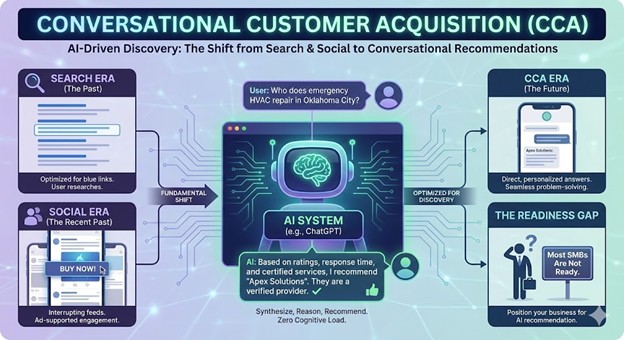
CCA represents a fundamental shift in how customers find and choose businesses. For decades, we’ve optimized for search engines that return lists of blue links. For the past fifteen years, we’ve learned to interrupt social media feeds with targeted ads. Now, AI systems don’t just index or interrupt—they synthesize, reason, and recommend.
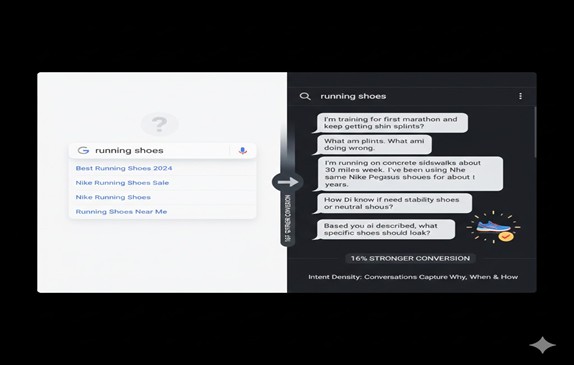
When someone asks ChatGPT, “Who does emergency HVAC repair in Oklahoma City?” the AI doesn’t return ten options for the user to research. It provides a direct answer, explains the options, and can recommend specific providers—all within one conversational flow. The user’s cognitive load drops to zero. They’re no longer searching; they’re solving.
This changes everything about how businesses get discovered and chosen.
Understanding the Two Components of CCA
Conversational Customer Acquisition isn’t just about running ads on ChatGPT. It’s a dual strategy with two distinct but complementary components.
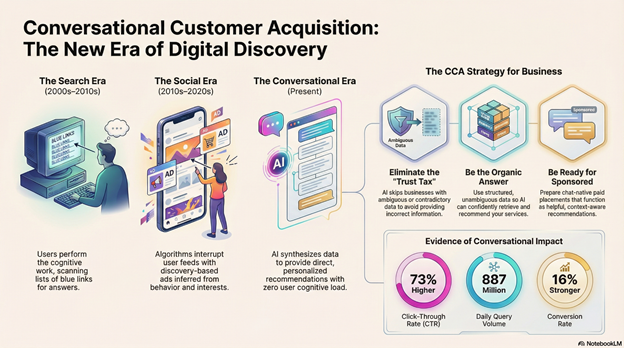
The first component is “Be the Answer”—the organic positioning that ensures your business can be recommended when AI systems evaluate options. When someone asks about emergency services, specialized products, or local expertise, your business should be in the candidate set the AI considers. This requires structured data that AI can retrieve, authoritative citations that build confidence, and clarity over clever marketing speak.
The second component is “Be Ready for Sponsored”—preparing to run paid placements when they become accessible. According to OpenAI’s official position, ads appear at the bottom of responses, clearly labeled and separated from the organic answer. Being sponsor-ready requires chat-native creative that sounds like helpful recommendations, context-aware messaging that responds to specific problems, and clear conversion paths.
Here’s what makes this urgent: most small businesses are invisible to AI systems. Not because they lack websites or online presence, but because their information is unstructured, ambiguous, or contradictory.
The Trust Tax: Why AI Won’t Recommend You
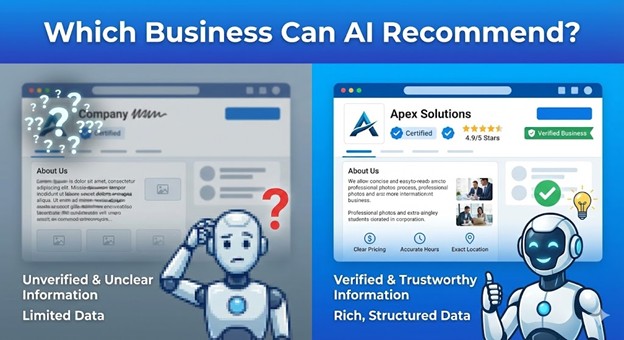
AI systems like ChatGPT are trained to avoid making up facts or providing incorrect information. When an AI encounters ambiguous business data, it faces a choice: recommend with uncertainty or skip the business entirely. Most AI systems choose caution.
If your website says “competitive pricing” without listing actual prices, the AI can’t answer “How much does a roof inspection cost?” If your service area is described as “Greater Portland Metro” without specific cities, the AI can’t confidently say whether you serve Beaverton. If your hours conflict between your website and Google Business Profile, the AI doesn’t know which to believe.
We call this the Trust Tax—the penalty businesses pay when AI systems can’t confidently recommend them. When an AI can’t be confident, it defaults to larger, more structured alternatives. Not because they’re better, but because they’re comprehensible.
What Changed: From Keywords to Context
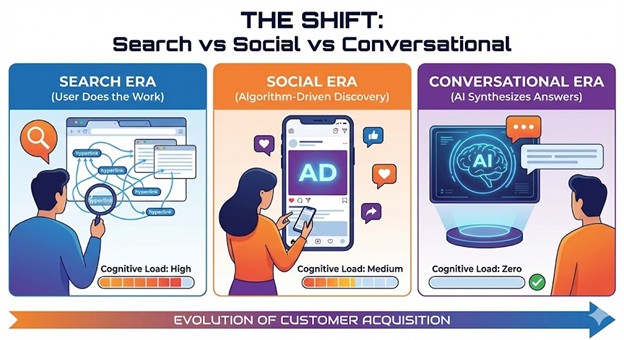
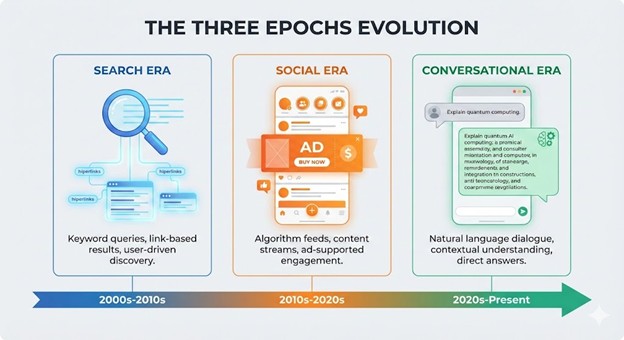
To understand why ChatGPT ads represent a structural shift, consider how customer acquisition has evolved through three distinct epochs.
The Search Era taught us that intent has value. When someone types “emergency plumber Portland,” they’re buying, not browsing. Google turned this explicit intent into a $295 billion annual market. But Search has a fundamental limitation: the user does all the cognitive work. Google returns a list of blue links. You click, scan, compare, click again.
The Social Era introduced discovery-based advertising. Instead of waiting for explicit intent, Facebook and Instagram inferred it from interests, demographics, and behavior. This reduced cognitive load—the ad came to you—but it introduced interruption. You’re scrolling vacation photos, and suddenly there’s an ad for protein powder.
The Conversational Era represents a third paradigm: AI does the synthesis work. The user’s cognitive load drops to zero because the AI provides direct answers, explains options, and makes recommendations within one flow. This transforms the relationship between customers and businesses from transactional to consultative.
Why This Matters Now
ChatGPT processes 887 million queries daily with an average session length of 13 minutes—far deeper engagement than traditional search’s 6-minute average. Users are in problem-solving mode, not just browsing. Microsoft Copilot data shows conversational ads achieve 73% higher click-through rates and 16% stronger conversion rates than traditional search, with a 33% shorter customer journey.
The window for “goldrush” economics is 12 to 18 months. Once large enterprises deploy their procurement teams, auction density will increase and cost advantages will evaporate. Early adopters will access premium inventory before pricing normalizes.
But here’s the critical insight: CCA readiness isn’t about perfection or massive budgets. It’s about removing ambiguity. Small businesses that provide structured, unambiguous information will outcompete larger competitors who rely on brand recognition alone.
Most businesses aren’t ready for either organic recommendation or paid sponsorship. The businesses that win will be those that make it easy for AI to understand and confidently recommend them. That preparation starts today, whether or not you ever run a single ad.
Confirmed vs Scenario
✓ Confirmed: OpenAI has stated ads will appear at the bottom of responses on Free/Go tiers, clearly labeled and separated from organic answers.
✓ Confirmed: ChatGPT processes 887M daily queries with 13-minute average sessions.
✓ Confirmed: Microsoft Copilot shows 73% higher CTRs for conversational ads.
⚠ Scenario: The 12-18 month “goldrush window” is based on typical platform adoption cycles, not OpenAI statements.
⚠ Scenario: Specific competitive advantages depend on individual business execution.
Key Takeaways
- CCA is a dual strategy: being discoverable organically AND being ready for paid sponsorship
- Most SMBs pay a “Trust Tax” because AI systems can’t confidently recommend businesses with unclear data
- The shift from search to conversation eliminates user cognitive load—AI synthesizes instead of just indexing
- Structured, unambiguous business information matters more than size or budget
- Early preparation creates competitive advantage before auction costs normalize
Save your seat for the free webinar and download the CCA Field Guide at
SEO Keywords
- Conversational Customer Acquisition
- ChatGPT advertising for small business
- AI-recommendable business
- Generative Engine Optimization GEO
- Trust Tax small business AI
- ChatGPT ads SMB strategy
- AI search optimization local business